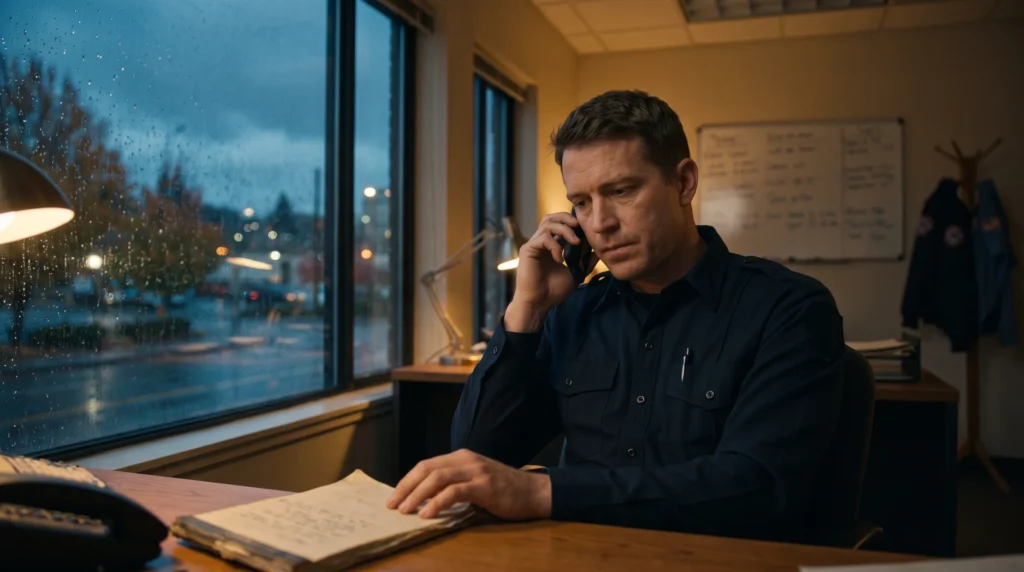
Tacoma autumn brings heavy rain, darker skies, and sudden shift updates. These seasonal changes create real stress for emergency workers facing long hours on local roads and call sites. Changing work patterns make daily balance harder for everyone on shift.
Code 4 Northwest offers confidential peer support for first responders who need a grounded person to talk to during difficult schedule shifts. Our team understands how hard seasonal schedule changes can be on rest cycles and home life. Talking with someone who knows the job helps keep every call in perspective.
Physical and Operational Stressors in Autumn Staffing
Shorter days and wet roads in Tacoma increase emergency call volume during early autumn. Changing work rosters disrupt sleep patterns and lower personal energy levels. Working late shifts in poor weather creates physical fatigue that accumulates week after week.
Our experts recognize that sudden schedule changes disrupt the body’s natural clock. Shift work during bad weather creates heavy physical fatigue for emergency crews. Staying sharp on duty requires clear routines and active personal care.
Our team knows that professional shift handoffs require personal balance and steady focus. Without direct team connection, small stresses accumulate quickly during long autumn night shifts. Simple daily habits help workers handle tough weather transitions cleanly.
Risks Associated with Autumn Schedule Rotations
Seasonal schedule changes bring real physical and operational risks for emergency workers. Unplanned roster shifts disrupt sleep patterns and create heavy physical fatigue. The following risks often surface during autumn shift changes:
- Sleep disruptions from sudden shift time changes
- Higher physical strain from driving in heavy rain and dark hours
- Reduced personal time with family during seasonal roster updates
- Isolation when moving from day shifts to night shifts
- Increased physical fatigue from cold weather response calls
Our professionals know that roster shifts often separate workers from their typical support systems. These changes can make daily work tasks feel much harder to manage. Getting assistance early helps keep workers steady on duty and at home.
We connect callers directly with peers who have walked in their shoes. Talking with someone who knows the job helps process daily pressures cleanly. Simple conversations with peers create real stability during demanding weeks.
Finding Trusted Assistance During Seasonal Shift Changes
Code 4 Northwest operates a direct resource line answered by trained active and retired emergency services personnel who offer confidential guidance. This structured connection helps callers maintain operational readiness and personal stability without fear of workplace reporting or record sharing.
Peer-Led Connection Standards
Our team offers direct phone assistance for workers handling tough seasonal transitions. Callers speak directly to experienced peers who understand dispatch calls, traffic incidents, and emergency scenes. Having an experienced peer on the line makes sharing difficult moments simple and comfortable.
Code 4 Northwest protects every conversation as a trusted and confidential resource. Callers share their experiences without worrying about agency records or employer updates. Safe peer communication provides a secure outlet for daily stress.
Practical Steps to Manage Shift Transitions
Professional standards recommend clear daily routines when switching between day and night duties. Proper hydration, planned sleep windows, and peer check-ins help maintain steady focus. These practical steps help emergency workers handle roster changes smoothly:
- Set consistent sleep times even on rest days
- Keep in touch with trusted team members during long shifts
- Use peer resources before fatigue affects work performance
- Adjust home schedules early to match new station hours
Our experts encourage workers to build these small habits early in the autumn season. Preparing early helps minimize the impact of dark streets and cold weather calls. Consistent habits make long shift rotations much easier to navigate.
Industry Standards for Operational Health
High operational standards require emergency crews to stay personally ready before responding to high-stress calls. Seasonal weather drops visibility and increases road hazards across Tacoma every fall. Taking care of personal needs helps workers respond safely to every incident.
Our professionals emphasize early outreach before shift fatigue turns into personal burnout. Early outreach helps keep crews safe, sharp, and focused on the line. Small steps taken today protect performance through the winter months ahead.
Code 4 Northwest supplies direct connections to proven local resources, assistance programs, and peer networks. Every caller gets clear options for ongoing stability. Having a strong connection gives workers confidence during difficult shifts.
Further Reading:
- Sponsoring Vital First Responder Support in Washington
- Private Support for Wenatchee Firefighters Facing Wildfire Stress
Professional Resource Lines for Seasonal Support
Seasonal shift updates in Tacoma bring distinct challenges that require strong, trusted connections. Our team stands alongside workers through every schedule change, weather shift, and demanding call. We encourage every crew member to reach out whenever shift pressure builds.
Call our resource line today to connect with confidential peer support for first responders.