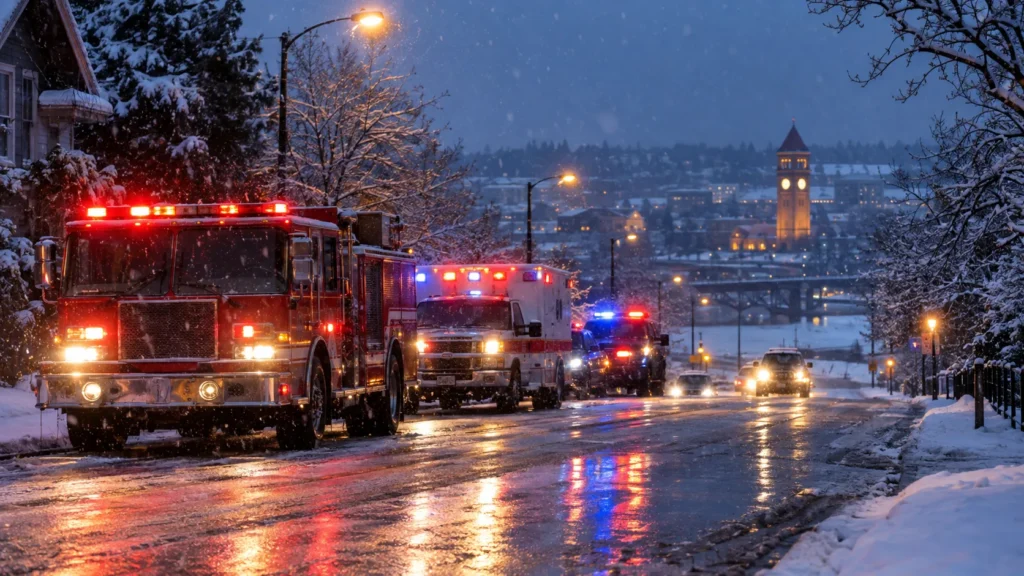
Winter freeze preparations across Spokane bring sudden spikes in road crashes, burst water lines, and house fires. Code 4 Northwest offers critical first responder support services when local crews work non-stop during these extreme cold snaps.
End-of-year emergency demands put huge physical and emotional pressure on emergency crews across our region. Our team sees how long shifts in freezing weather impact local police officers, firefighters, dispatchers, and paramedics. Strong local backing helps these brave individuals stay healthy while protecting our neighborhoods.
Our experts observe how extreme weather events spike call volumes in very short windows. Rapid weather changes create continuous operational challenges for entire regional dispatch networks. Local support keeps public safety teams focused when workloads peak in December and January.
Local Emergency Demands During Washington Winters
Freezing temperatures in eastern Washington create hazardous roads and dangerous calls in residential areas. Our experts help emergency personnel manage heavy stress when calls stack up during severe snowstorms.
First responders routinely work double shifts to keep roads clear and rescues moving. High call volumes in December and January test every agency’s endurance in the region. Community awareness creates a safer environment for everyone when winter weather turns harsh.
Extremely cold conditions force crews to navigate hazardous road ice while managing heavy safety gear. Our team understands that physical strain quickly leads to fatigue for frontline responders. Proper backing from civic leaders ensures local agencies maintain adequate resources during peak winter weather.
Risks increase rapidly for crews working on icy roads during sub-zero temperatures. Industry records identify major hazards during severe cold weather snaps:
- Severe physical fatigue from long shifts in extreme cold weather.
- Physical strain from operating heavy rescue tools on icy surfaces.
- Heightened stress during complex multi-vehicle road collisions.
- Increased risk of exposure injuries during extended outdoor rescues.
How Citizens and Businesses Can Help Emergency Personnel
| Community Action | Direct Impact on Emergency Personnel | Operational Benefit |
| Clearing Hydrants and Driveways | Reduces response times during winter freezes | Keeps crews safer on scene |
| Yielding to Emergency Vehicles | Lowers vehicle accident risks on icy roads | Allows faster arrival at emergencies |
| Sharing Resource Information | Connects frontline workers to trusted assistance | Strengthens local relief networks |
| Maintaining Home Fire Safety | Prevents structural fires during peak cold | Reduces extreme overtime demands |
Simple Actions for Homeowners
Homeowners reduce emergency call volume by completing basic winter home checks early. Clearing ice off walkways gives medics safe access during urgent home calls. We encourage neighborhood leaders to share winter safety tips across local groups.
Proper chimney cleaning prevents dangerous heating fires when temperatures drop below freezing. Safe driving practices on icy city streets protect both drivers and responding police officers.
Checking property water meters prevents sudden pipe bursts during extended deep freezes. Homeowners who keep outdoor walkways clear of snow help emergency crews move safely during night calls.
Strategic Help from Local Business Owners
Local businesses protect public safety by keeping commercial parking areas salted and plowed. Our professionals watch local business leaders partner with emergency groups to share helpful resources. Commercial property maintenance reduces slips, falls, and serious traffic accidents.
Businesses can also post resource numbers in breakrooms for off-duty personnel. Simple public recognition boosts morale during long, difficult winter work schedules.
Commercial property managers can establish clear emergency lanes free of stored snow piles. Keeping delivery areas well lit reduces accidents for responding emergency vehicles after dark.
How Our Confidential Peer Resource Line Works
Code 4 Northwest operates a dedicated resource line where emergency workers find confidential peer help. Our team connects responders and their family members to trusted assistance programs. We offer direct understanding because our staff includes current and former first responders.
Frontline workers often need a safe space to discuss personal and professional stress. Our professionals guide callers toward verified resources without bureaucratic friction or complex paperwork. Callers talk directly with peers who understand the unique pressures of public service work.
Confidentiality underpins every contact made to our resource line. We maintain a non-judgmental environment where public safety workers speak freely about daily challenges.
Our staff connects callers with peer volunteers who share similar professional backgrounds. Responders gain direct access to practical tools without worrying about career exposure or administrative tracking.
Building Stronger Public Safety Networks Across the Region
Public safety networks rely on strong connections between local residents and emergency teams. Code 4 Northwest builds bridge points that strengthen peer assistance programs statewide. Communities thrive when first responders receive steady backing from the people they serve.
Severe winter storms highlight the ongoing need for reliable peer support structures. We continue expanding reach so every dispatcher, officer, firefighter, and medic knows where to turn.
Coordinated community efforts ensure that frontline workers never feel isolated during heavy call periods. Our team works continuously to expand educational outreach for public safety families across Washington.
Further Reading:
- Private Guidance for Washington First Responders Managing Operational Strain
- Personal Budgets: How Yakima First Responders Find Trusted Help
Partnering for Frontline Strength
Strong communities depend on healthy, supported emergency responders during high-stress winter periods. Code 4 Northwest provides continuous peer assistance across all public safety disciplines. By keeping properties prepared, citizens reduce preventable strain on local crews when winter weather strikes.
Contact Code 4 Northwest today to learn more about backing our local first responder support services.